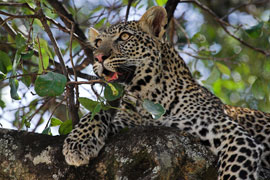
The most secretive and
elusive of the large carnivores, the leopard is
also the shrewdest. Pound for pound, it is the
strongest climber of the larger cats and is
capable of killing prey far larger than itself.
The coloring of the leopard varies from white to
bright golden brown, spotted with black spots
and rosettes. The rosettes consist of groups of
5 to 6 spots arranged in a tight ring.
The tail is longer than half the body length
measured from head to tail. This fierce animal
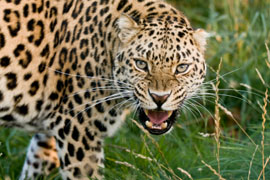
has small round ears and long whiskers growing
from dark spots on the upper lip. The size of
the leopard varies considerably. The leopard
differs from the cheetah in having shorter legs,
and rosette-like spots and is without the
cheetah’s black "tear" marks from eye to mouth.
Quick Facts
Name: Panthera Pardus
Size: The leopard ranges in size from 1 to almost 2 metres long, and weighs between 30 - 70 kg. Females are typically around two-thirds the size of males.
Diet: Carnivorous; Small animals and medium size antelope.
Habitat: Bush and riverine forests. Usually in or near thickets on mountain sides or along streams and rivers. Leopards are mainly nocturnal animals but are also seen during the day, especially in the early mornings and late afternoons. They usually forage alone except in the mating season.
Socialisation: Leopards are basically solitary and go out of their way to avoid one another. Each animal has a home range that overlaps with its neighbours; the male's range is much larger and generally overlaps with those of several females. A leopard usually does not tolerate intrusion into its own range except to mate. Unexpected encounters between leopards can lead to fights.
Reproduction: Leopard breed throughout the year.
Gestation: The gestation period is 3 months. Number of young is 2 to 3 although more have been recorded.
Life Expectancy: 20 years.